
The important stuff
-
Itinerary Overview
Day 1 – Arrive in Tanzania | Moshi
Arrive at Kilimanjaro International Airport where you’ll be met and transferred to your accommodation in Moshi, approximately one hour away. Settle in, recover from the journey and begin adjusting to your new time zone.
Day 2 – Coffee Farm & Pre-Climb Day | Flexible
Ease into Tanzania with a complimentary visit to a local coffee farm, discovering how coffee is grown, harvested and prepared before sampling a fresh local brew. The remainder of the day is deliberately relaxed, giving you time to adjust to the time zone, complete your trek briefing and equipment check, or simply unwind before the climb.
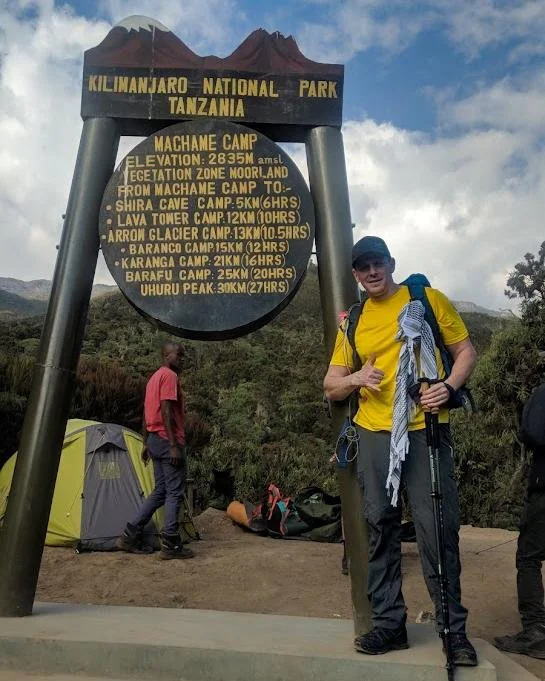
Day 3 – Machame Gate to Machame Camp | 2,850m | 5–7 hrs
Drive through the foothills of Kilimanjaro to Machame Gate before beginning the climb through dense montane rainforest. Follow moss-covered trails steadily uphill to your first mountain camp. 11 km trekking.
Day 4 – Machame Camp to Shira 2 Camp | 3,810m | 5–6 hrs
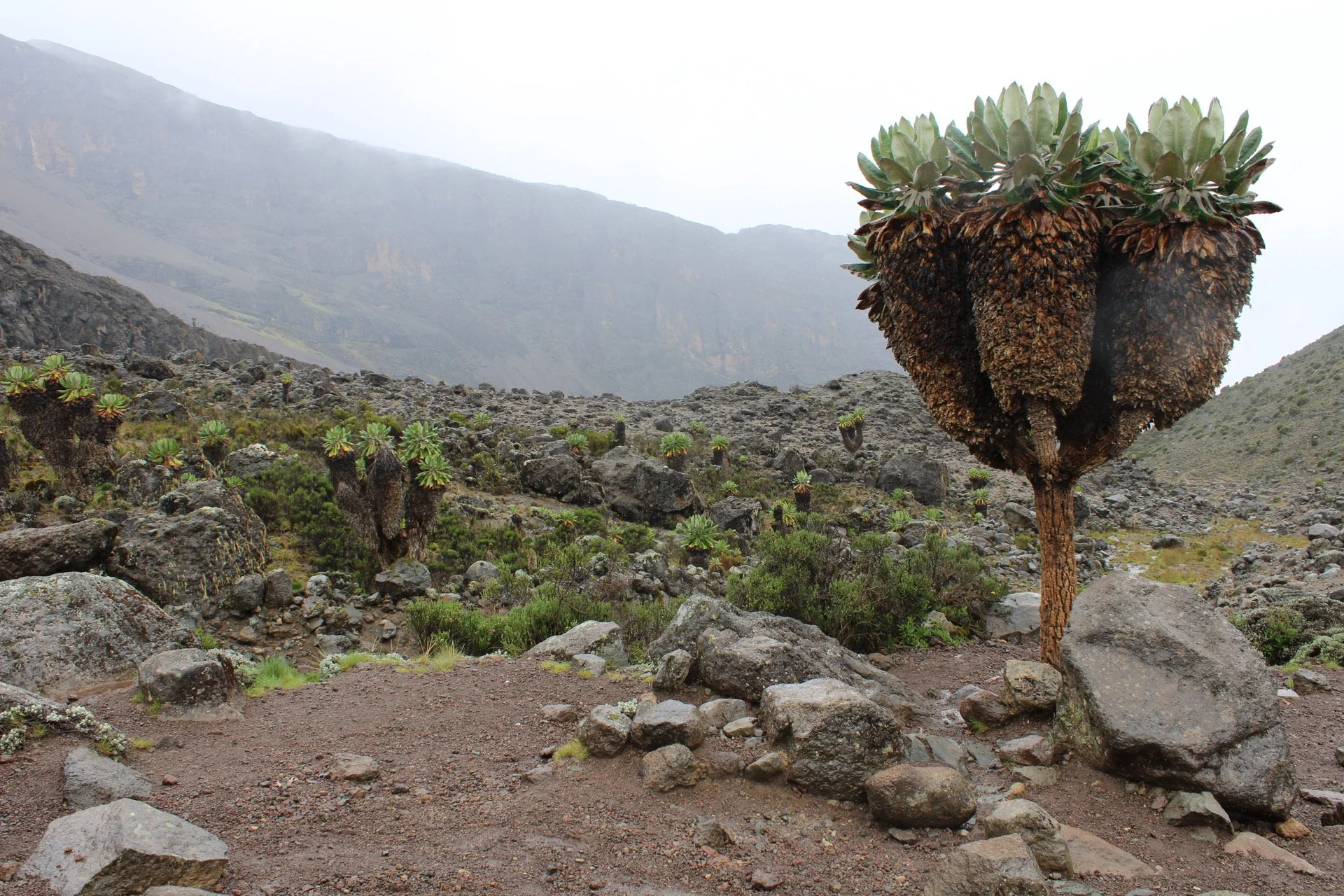
Leave the rainforest behind as the landscape opens into heath and moorland, with increasingly expansive views across the surrounding valleys. Continue across volcanic terrain to Shira 2 Camp beneath Kilimanjaro’s western slopes. 5 km trekking.
Day 5 – Shira 2 to Lava Tower & Barranco Camp | 4,630m high point | 6–8 hrs
Climb into the alpine desert to Lava Tower at around 4,600 metres before descending to Barranco Camp for the night. This classic “climb high, sleep low” day plays an important role in acclimatisation while delivering some of the route’s most dramatic scenery. 10 km trekking.
Day 6 – Barranco Camp to Karanga Camp | 3,995m | 4–5 hrs
Begin with the famous Barranco Wall, a steep but non-technical climb beneath the Heim and Kersten glaciers, before traversing towards the Karanga Valley. Those feeling strong can take an additional acclimatisation walk above camp in the afternoon. 5 km trekking.
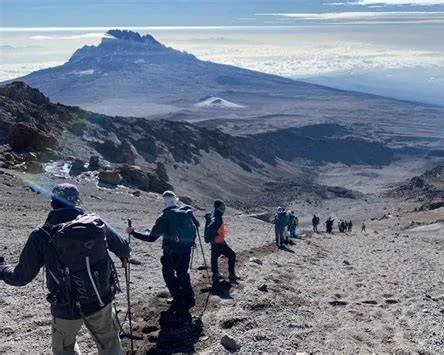
Day 7 – Karanga Camp to Barafu Camp | 4,673m | 4–5 hrs
Climb across increasingly barren alpine terrain to Barafu Camp, your launch point for the summit. The afternoon is kept deliberately quiet for eating, hydrating and resting before waking around midnight for the final ascent. 4 km trekking.
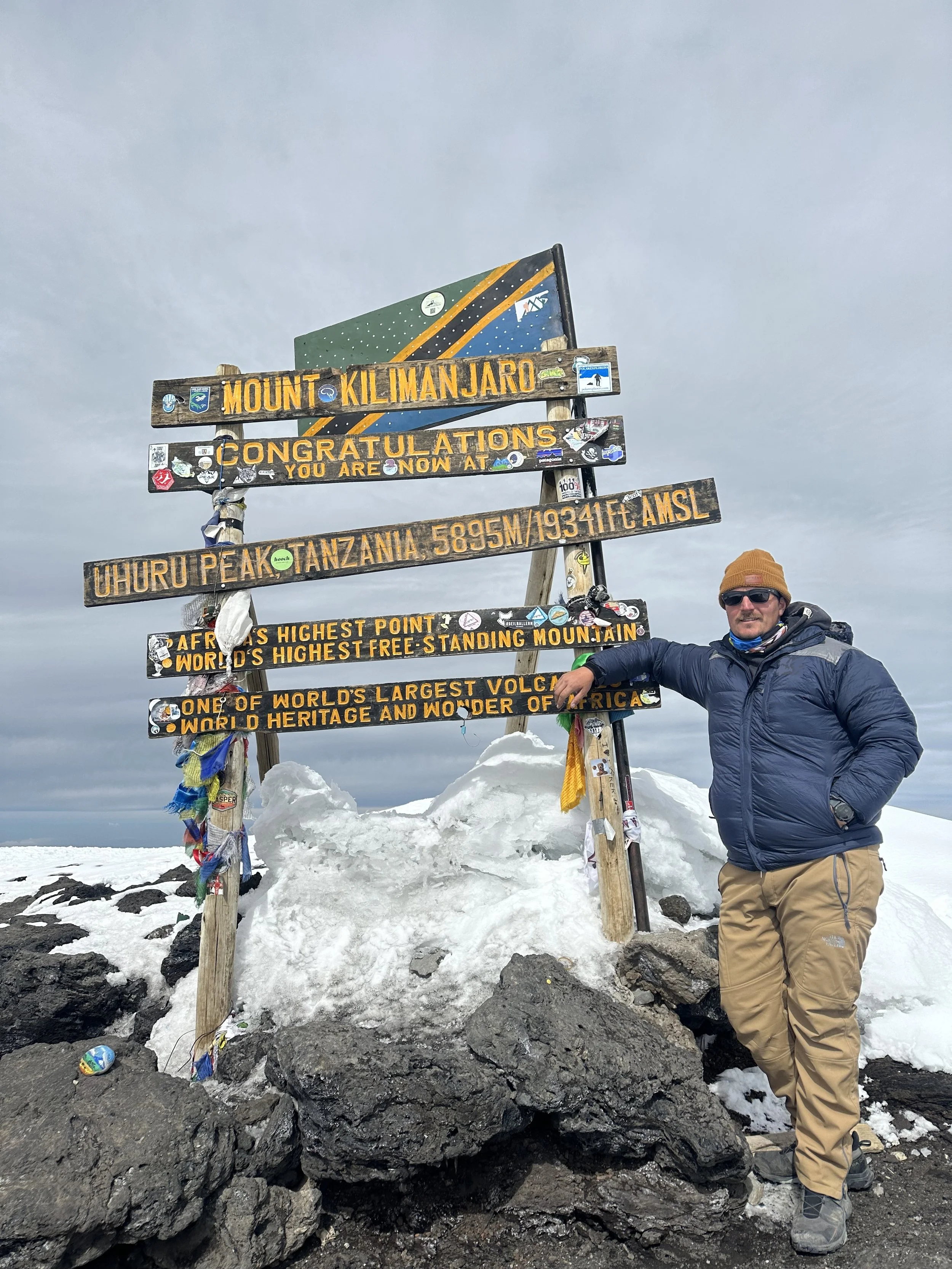
Day 8 – Barafu Camp to Uhuru Peak & Millennium Camp | 5,895m | 8–12 hrs
Set out around midnight for the toughest and most rewarding stage of the journey, climbing through the darkness to Stella Point before continuing to Uhuru Peak—the highest point in Africa at 5,895 metres. After celebrating on the summit, descend via Barafu towards Millennium Camp for a much-needed rest. Popote lists approximately 6–8 hours for the summit section plus another 2–4 hours descending.
Day 9 – Millennium Camp to Mweka Gate & Moshi | 5–7 hrs
Descend through the rainforest to Mweka Gate, where you’ll complete park formalities and receive your Kilimanjaro summit certificate. From here, transfer back to Moshi for a hot shower, a proper bed and a well-earned celebration. 12 km trekking.
Day 10 – Departure or Continue Your Tanzania Adventure
Transfer to Kilimanjaro International Airport for your onward journey—or don’t head home just yet. Kilimanjaro pairs perfectly with a Serengeti and Ngorongoro safari, a few slower days exploring Tanzania, or a beach escape to Zanzibar, and we can seamlessly build any of them into your itinerary.
-
Transport
Airport pickup and drop-off at Kilimanjaro International Airport
Transfers between your Moshi accommodation and the Kilimanjaro trailheads
Accommodation
Twin-share hotel accommodation in Moshi before and after the climb
Twin-share four-season camping tents throughout the Machame Route
Sleeping mats provided for use on the mountain
Meals & Drinks
Three freshly prepared meals each day while on the mountain
Tea, coffee and hot chocolate at camp
Filtered drinking water throughout the trek
Mountain Crew
Experienced Kilimanjaro mountain guides
Assistant guides, cooks and porters as required for the group
Crew wages and support in accordance with local Kilimanjaro standards
Guides trained in wilderness and emergency first aid
Permits & Fees
Kilimanjaro National Park entry fees
Camping fees
Rescue fees
Applicable Tanzanian taxes and government charges
Safety & Equipment
Emergency oxygen
Pulse oximeter monitoring during the trek
Daily altitude and wellbeing assessments
Established evacuation procedures
Portable toilet facilities on the mountain
Warm washing water provided at camp twice daily
-
International and domestic flights
Tanzania visa
Travel, medical and high-altitude trekking insurance
Personal trekking clothing and equipment
Equipment hire or purchases required before the climb
Single-room or single-tent supplements
Laundry and other personal expenses
Meals in Moshi outside those specifically included in your itinerary
Additional activities, tours or accommodation not listed in the package
Tips and gratuities for guides, porters, cooks and support crew
A dedicated expedition doctor
-
Why we don’t rush the mountains
Our trekking itineraries are based on recognised adventure-travel industry standards and established acclimatisation practices for each region.
While itineraries can often be extended to include additional rest days, side trips or a slower pace, shortening the recommended trekking schedule is generally not advised and as such not supported by Peak Perspectives Travel Co. or our local partners.
These routes and timeframes have been developed around tried-and-tested procedures that help reduce the risk of altitude-related illness while improving your safety, comfort and overall likelihood of successfully completing the journey.
The mountains aren’t going anywhere.
We’d rather help you experience them properly than rush you through them.
-
No technical climbing experience required • Good general fitness recommended • Previous multi-day hiking experience beneficial
Challenging | Good fitness required
Climbing Kilimanjaro via the Machame Route is physically demanding, but it is a non-technical trek and does not require previous mountaineering experience. The challenge comes from consecutive days of trekking, significant altitude, changing terrain and a long summit day rather than technical climbing. Popote describes the route as best suited to people in good physical condition who are prepared for a strenuous multi-day trek. Popote Africa
Most days involve approximately 5–8 hours of walking, generally covering around 5–15 km, with steady elevation gain as you move through rainforest, moorland and alpine desert. Summit day is considerably tougher, beginning around midnight and involving roughly 6–8 hours of ascent followed by another 2–4 hours of descent. Popote Africa
You don’t need to be an elite athlete, but you should arrive comfortable walking for several hours at a time and able to repeat that effort over consecutive days. Regular hiking, cardiovascular training and leg-strength work in the months before departure will make the experience considerably more enjoyable.
Altitude is the biggest variable. Fitness can make the physical workload easier, but it does not make anyone immune to altitude illness. Our 7-day Machame itinerary allows more time for acclimatisation than the shortened 6-day option and uses the route’s natural “climb high, sleep low” profile to help your body adjust progressively.