
The important stuff
-
Day 1 – Arrive Kathmandu
Welcome to Nepal. Airport transfer and time to settle into Kathmandu.Day 2 – Kathmandu | Your Day, Your Way
Join our complimentary Kathmandu city tour, spend the day exploring independently, or let us arrange something completely different for you. Later, meet your trekking team and prepare for the journey ahead.Day 3 – Kathmandu → Dharipani
Leave the capital behind and travel west through the foothills towards Besisahar and the Marsyangdi Valley, reaching the trailhead at Dharipani.Day 4 – Dharapani → Chame
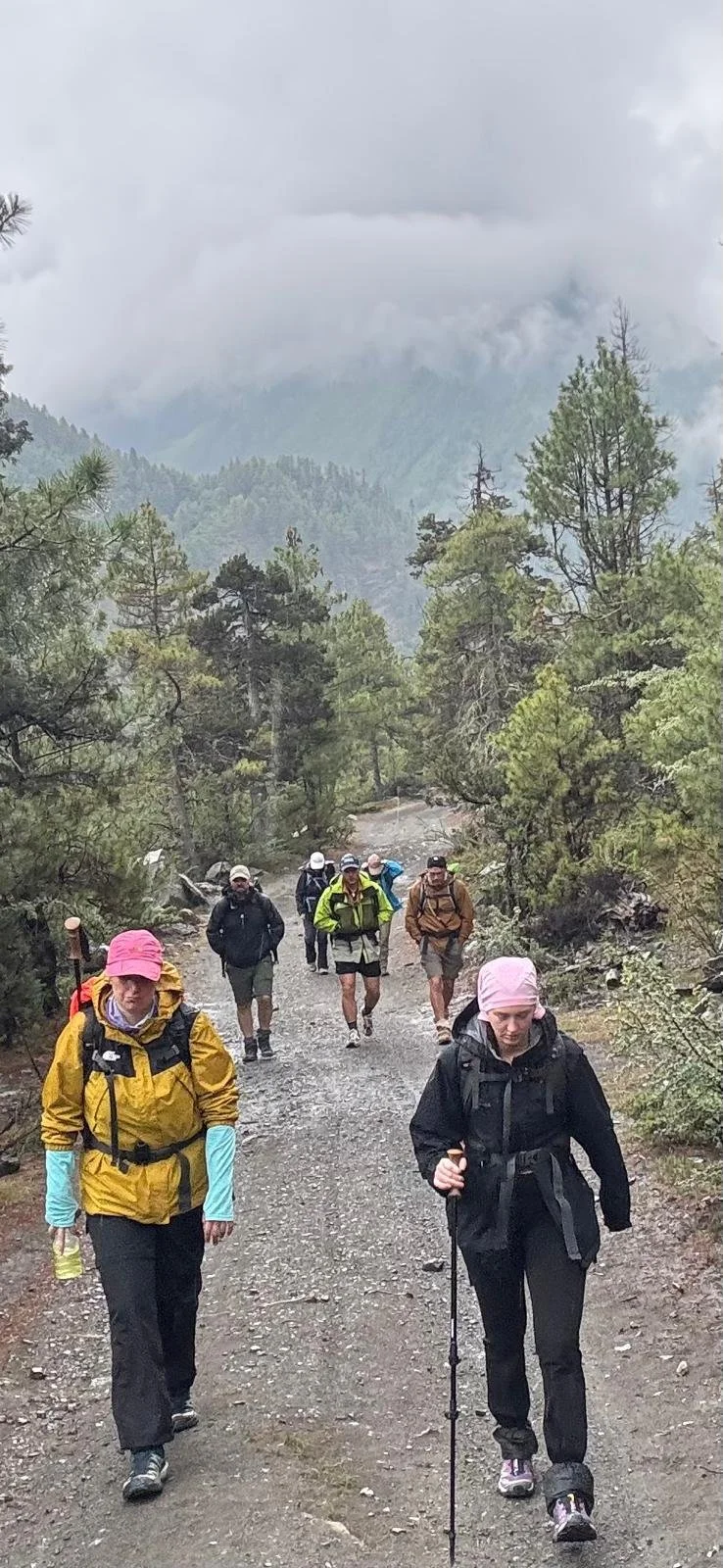
Climb through pine and oak forest towards Chame, the administrative centre of Manang, with the high Himalaya beginning to dominate the skyline.Day 5 – Chame → Pisang
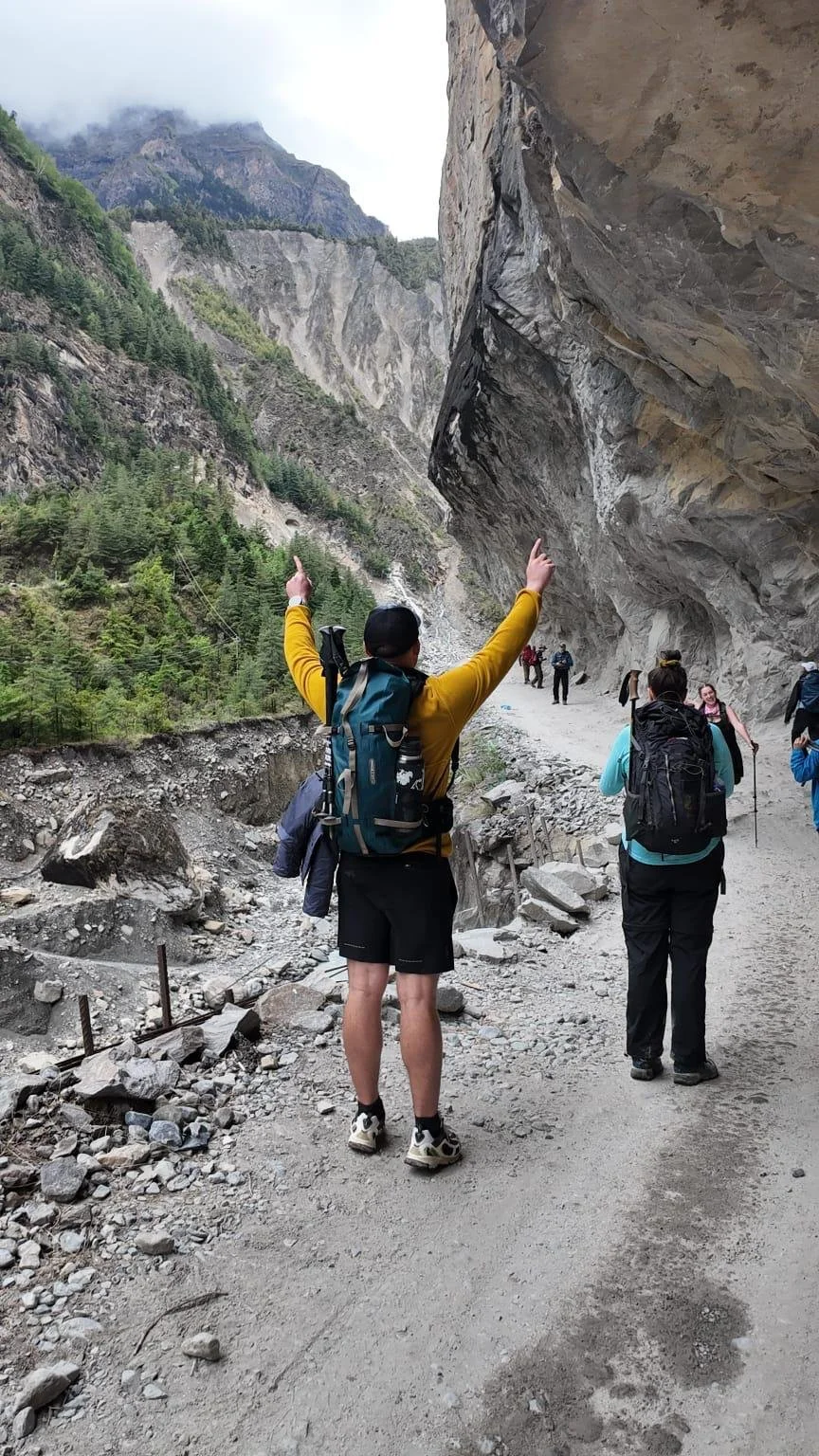
Continue through a dramatically narrowing valley, past Bhratang's apple-growing country and beneath immense rock faces to Pisang.Day 6 – Pisang → Manang
Take the spectacular higher trail via Ghyaru and Ngawal, with sweeping views towards Annapurna II and III, before descending into Manang.Day 7 – Manang | Acclimatisation Day
A deliberately slower day at 3,540 metres. Explore Manang, hike towards Gangapurna Lake or Milarepa Cave, or tackle the higher walk towards Ice Lake if conditions and acclimatisation allow.Day 8 – Manang → Yak Kharka / Ledar
Leave the larger settlements behind and climb into increasingly sparse alpine terrain, where yak pastures replace forests and the air noticeably thins.Day 9 – Yak Kharka → Thorong Phedi
A shorter but important acclimatisation day as you approach the foot of Thorong La.Day 10 – Thorong Phedi → Thorong La → Muktinath
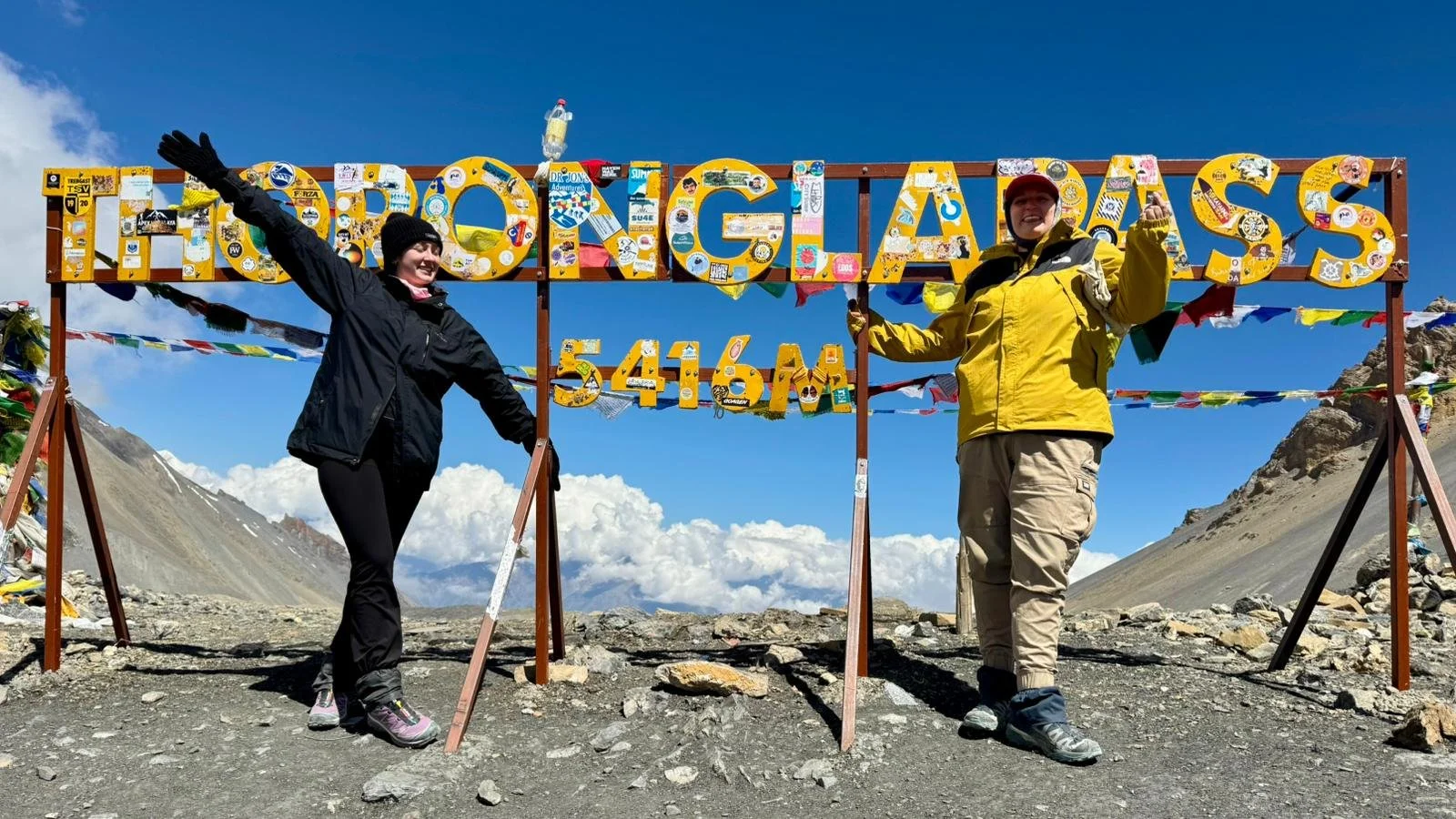
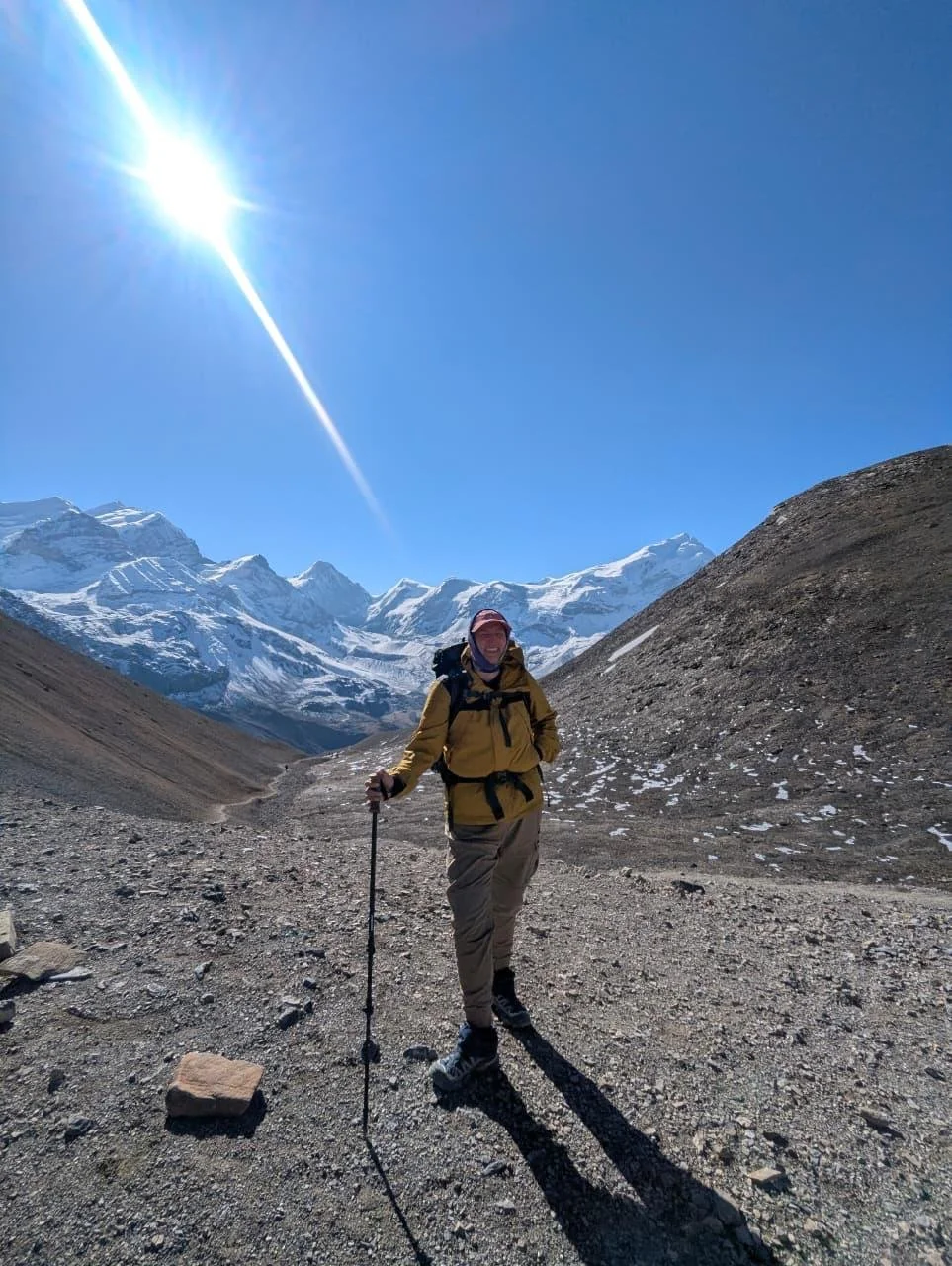
The defining day of the Annapurna Circuit. Start before dawn and climb to Thorong La, 5,416 metres, before making the long descent to the sacred pilgrimage settlement of Muktinath.Day 11 – Muktinath → Tatopani
Drive from Muktinath to Tatopani as this is now a road suitable for vehicles and is shared with trekkers, local livestock, cars etcDay 12 – Tatopani → Shikha
Trade the river valley for a long climb through villages and forest towards ShikhaDay 13 - Shikha → Ghorepani
Continue your descent down the path through remaining forests as the skyline continues to change giving you a glimpse of what’s to come the next dayDay 14 – Ghorepani → Poon Hill → Pokhara
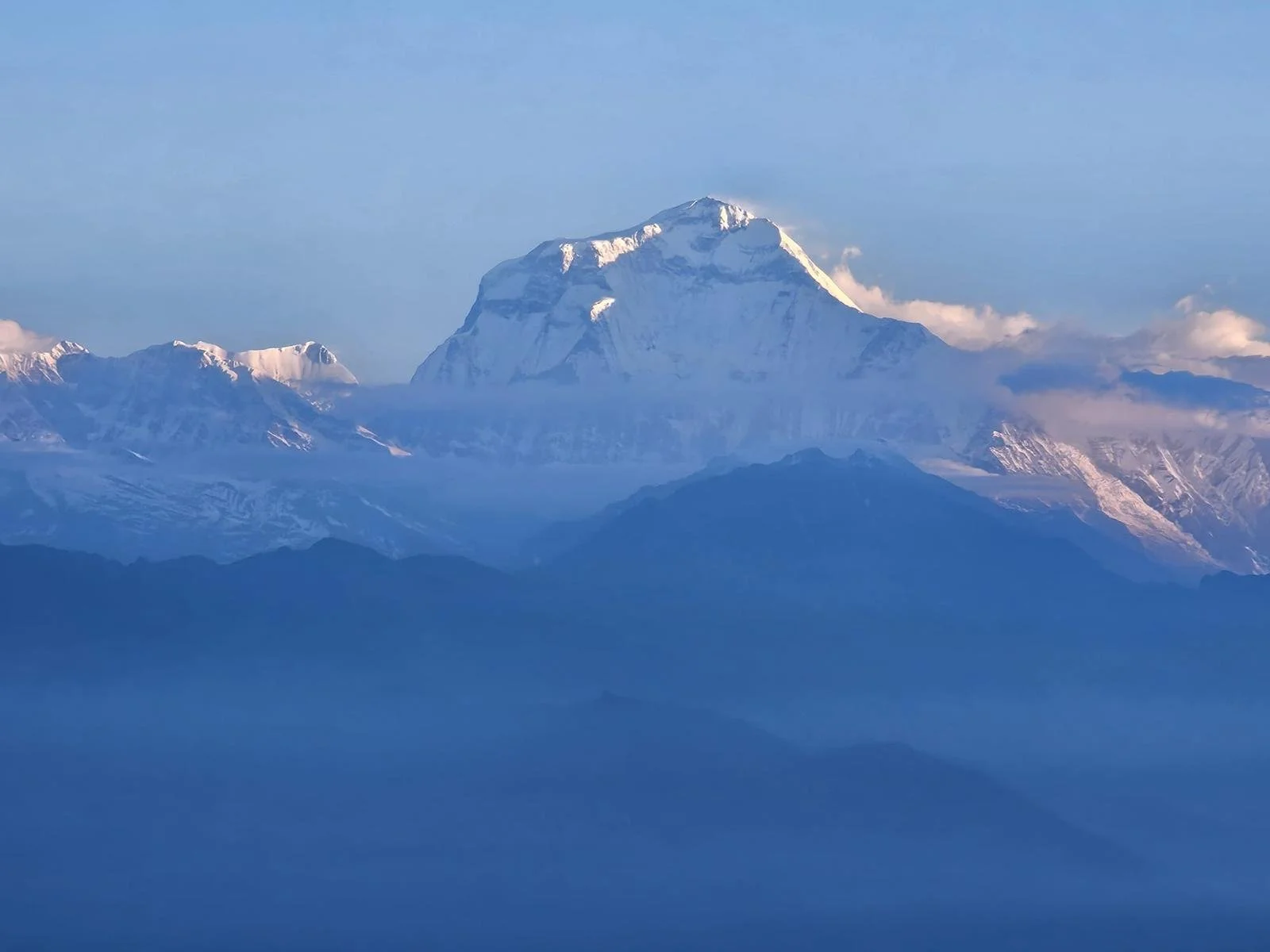
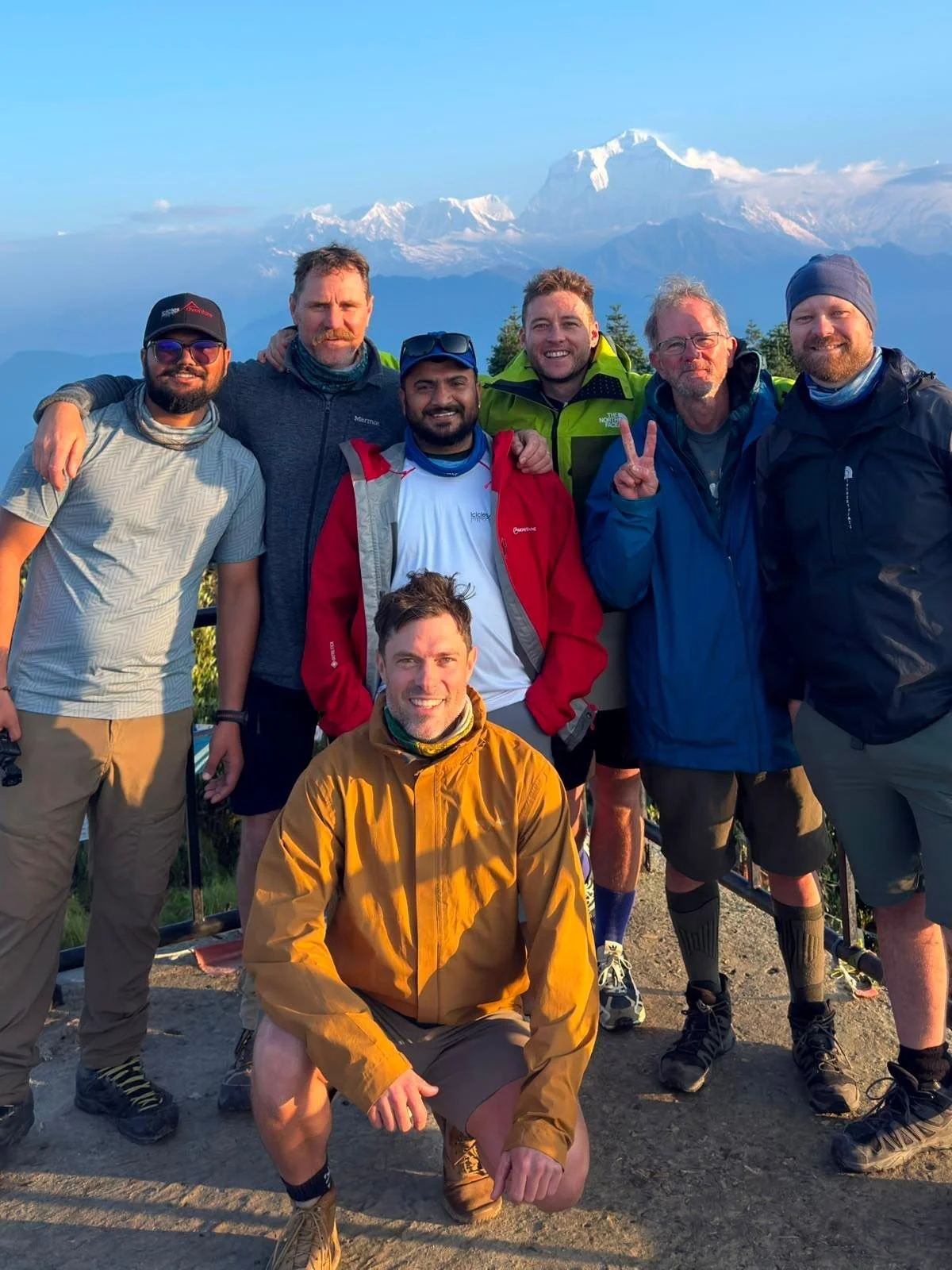
Rise early for sunrise from Poon Hill, looking across the Annapurna and Dhaulagiri ranges, before descending from the mountains and travelling to Pokhara by road.Day 15 – Optional extra day in Pokhara
Completely optional if you do wish to head home a day early, but highly recommended. Reach out to us if you would like to drop this day from your itineraryDay 16 - Pokhara → Kathmandu
Drive from Pokhara to Kathmandu. Reach out to us if you’d like to upgrade this to a short 30 min flight instead.Day 17 – Depart Kathmandu
Airport transfer for your onward journey — or stay longer and keep exploring Nepal. -
Transport
Private airport and hotel transfers in Kathmandu
Private transfer from Kathmandu via Besisahar to the trek starting point at Syange/Jagat
Private transfer from Nayapul to Pokhara at the completion of the trek
Transfer from Pokhara to Kathmandu by private vehicle, or tourist bus for solo travellers
Accommodation
3 nights’ twin-share accommodation in Kathmandu at a 4-star hotel such as Ramada Encore or similar
1 night’s twin-share accommodation in Pokhara at a 3-star hotel
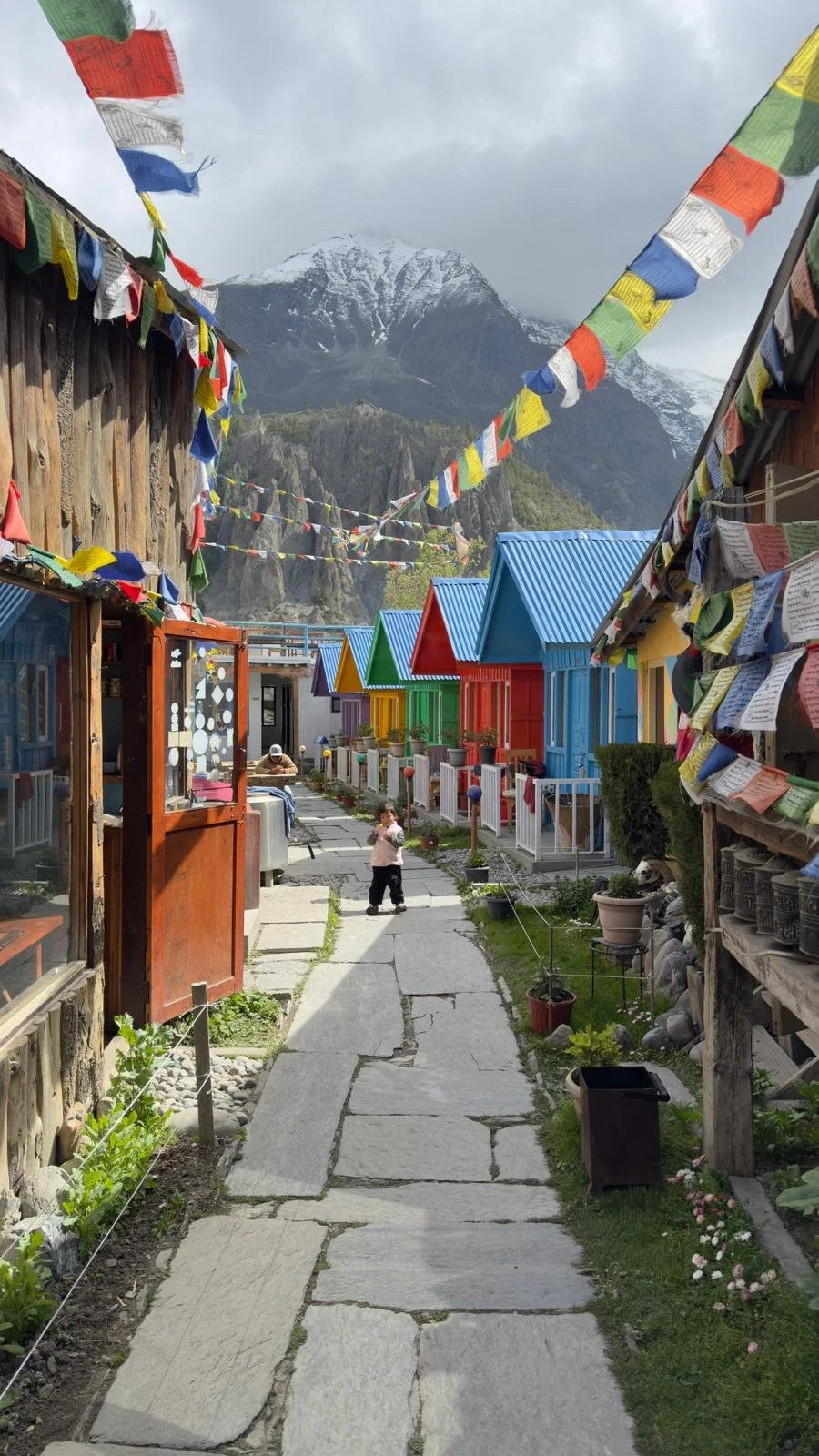
14 nights’ twin-share accommodation in local teahouses throughout the trek
Meals
Breakfast, lunch and dinner during the trekking portion of the journey
Breakfast while staying in Kathmandu and Pokhara
Farewell dinner in Kathmandu
Seasonal fruit during the trek
Trekking Team
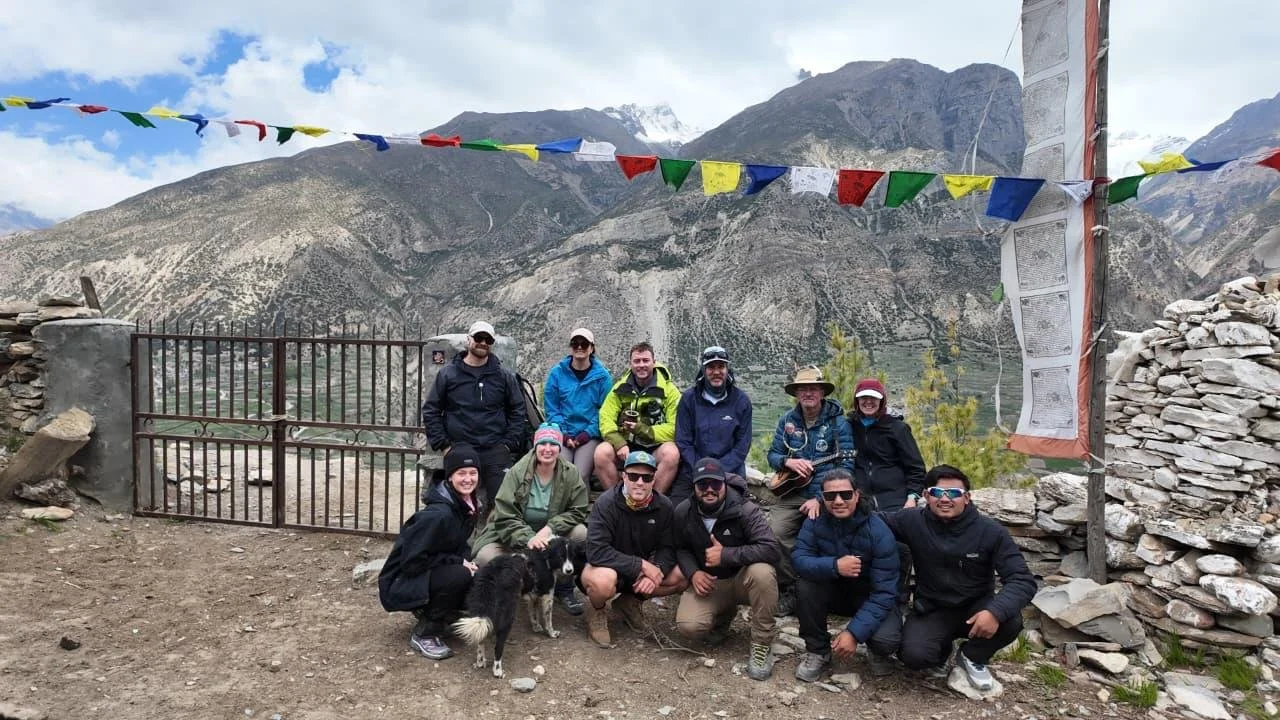
Experienced English-speaking trekking guide/leader for each group
One assistant guide for every 6 trekkers, including their meals, accommodation, transport, salary and insurance
Porters at a ratio of 1 porter per 2 clients, carrying up to 15kg of personal gear per client, including their meals, accommodation, transport, salary and insurance
Professional guide for the Kathmandu city tour
Permits & Entrance Fees
Annapurna Conservation Area Permit (ACAP)
TIMS permit
Entrance fees for temples and monuments included in the Kathmandu city tour
All applicable Nepalese government taxes and charges
Equipment & Extras
Complimentary use of a down sleeping bag and down jacket for the duration of the trek
Complimentary 80L duffel bag for personal belongings carried by your porter
Annapurna Circuit trekking map
First aid kit carried by your guide throughout the trek
-
Transport
International flights to and from Nepal
Domestic flights, including an optional flight from Pokhara to Kathmandu
Additional transportation required outside the scheduled itinerary
Accommodation
Additional nights in Kathmandu or Pokhara resulting from early arrival, late departure, itinerary changes or an early return from the mountains
Meals & Drinks
Lunch and dinner in Kathmandu and Pokhara unless specifically listed
Tea, coffee, soft drinks and alcoholic beverages
Drinking water during the trek
Desserts or additional food ordered outside the included meals
Other Expenses
Nepal tourist visa
Travel, medical and emergency rescue insurance
Optional activities or excursions not included in the itinerary
Personal expenses including phone calls, laundry, charging devices, hot showers and additional porters
Personal trekking equipment and clothing
Tips and gratuities for guides, porters and support staff
-
No technical climbing required • Good general fitness required • Previous hiking experience strongly beneficial
The Annapurna Circuit is a long, varied trek involving consecutive days of walking through everything from subtropical valleys to high alpine terrain. The physical high point is the crossing of Thorong La, and while the route does not require technical climbing skills, the combination of altitude, long trekking days and sustained ascent makes preparation important. Icicles describes the circuit as a moderate-level trek that should not be attempted without appropriate training and preparation.
Previous trekking experience is not compulsory, although time spent hiking before departure will make the journey considerably more comfortable. You should be prepared for several hours of walking each day while carrying a light daypack, with regular cardiovascular exercise, hill walking and lower-body strength work providing a strong training base.
The itinerary deliberately builds altitude gradually and includes time in Manang for acclimatisation before moving higher towards Thorong La. Longer acclimatisation hikes can also be undertaken depending on your fitness and how you are adjusting to the altitude.
-
Why We Don’t Rush the Mountains
Our trekking itineraries are based on recognised adventure-travel industry standards and established acclimatisation practices for each region.
While itineraries can often be extended to include additional rest days, side trips or a slower pace, shortening the recommended trekking schedule is generally not advised and as such is not supported by Peak Perspectives Travel Co. or our local partners.
These routes and timeframes have been developed around tried-and-tested procedures that help reduce the risk of altitude-related illness while improving your safety, comfort and overall likelihood of successfully completing the journey.
The mountains aren’t going anywhere.
We’d rather help you experience them properly than rush you through them.